

 Nosotros
 ¿Por qué elegir K12?
 Necesidades de seguridad
 Cómo triunfan los alumnos
 Preguntas frecuentes
 Escuela primaria en línea
 Escuela intermedia en línea
 Preparación para la profesión y la universidad
 Escuela secundaria en línea
 Clubes de estudiantes
 Servicios profesionales y universitarios
 Dentro del aula en línea
 El día a día
 Social y extracurricular
 Consejos, asesoramiento e inspiración
 Beneficios de por vida
 Inscribirse
 Todas las opciones de escuelas
 ¿Necesitas más ayuda?
¿Cuáles son los requisitos para transferirse a una escuela en línea a mitad de año?
Conoce lo que se necesita para transferirte a la escuela en línea a mitad de año, incluidas las transcripciones, las reglas de residencia y los requisitos tecnológicos.

Tabla de contenidos
Transferirse a una escuela K-12 en línea a mitad de año es muy manejable, pero hay algunos requisitos básicos que cada familia debe cumplir. Estos requisitos son generalmente similares en los Estados Unidos, aunque las reglas exactas varían según el estado y la escuela.
Aquí está el desglose básico paso a paso de lo que normalmente se requiere:
- Solicitud de inscripción: Debe completar una solicitud con la nueva escuela.
- Documentos requeridos: Casi todas las escuelas en línea requieren un conjunto estándar de documentos.
- Retiro de la escuela actual de su hijo: No puede inscribirse en línea hasta que se retire de la escuela actual de su hijo.
- Configuración de tecnología y aprendizaje: Asegúrese de tener una conexión a Internet confiable y una computadora o computadora portátil.
- Requisitos estatales y de residencia: Consulta las reglas del Departamento de Educación de tu estado.
Aprender más sobre la inscripción en la escuela en línea de mitad de año te ayudará a sentirte seguro a medida que tu hijo hace el cambio.
Documentación requerida para la transferencia de mitad de año
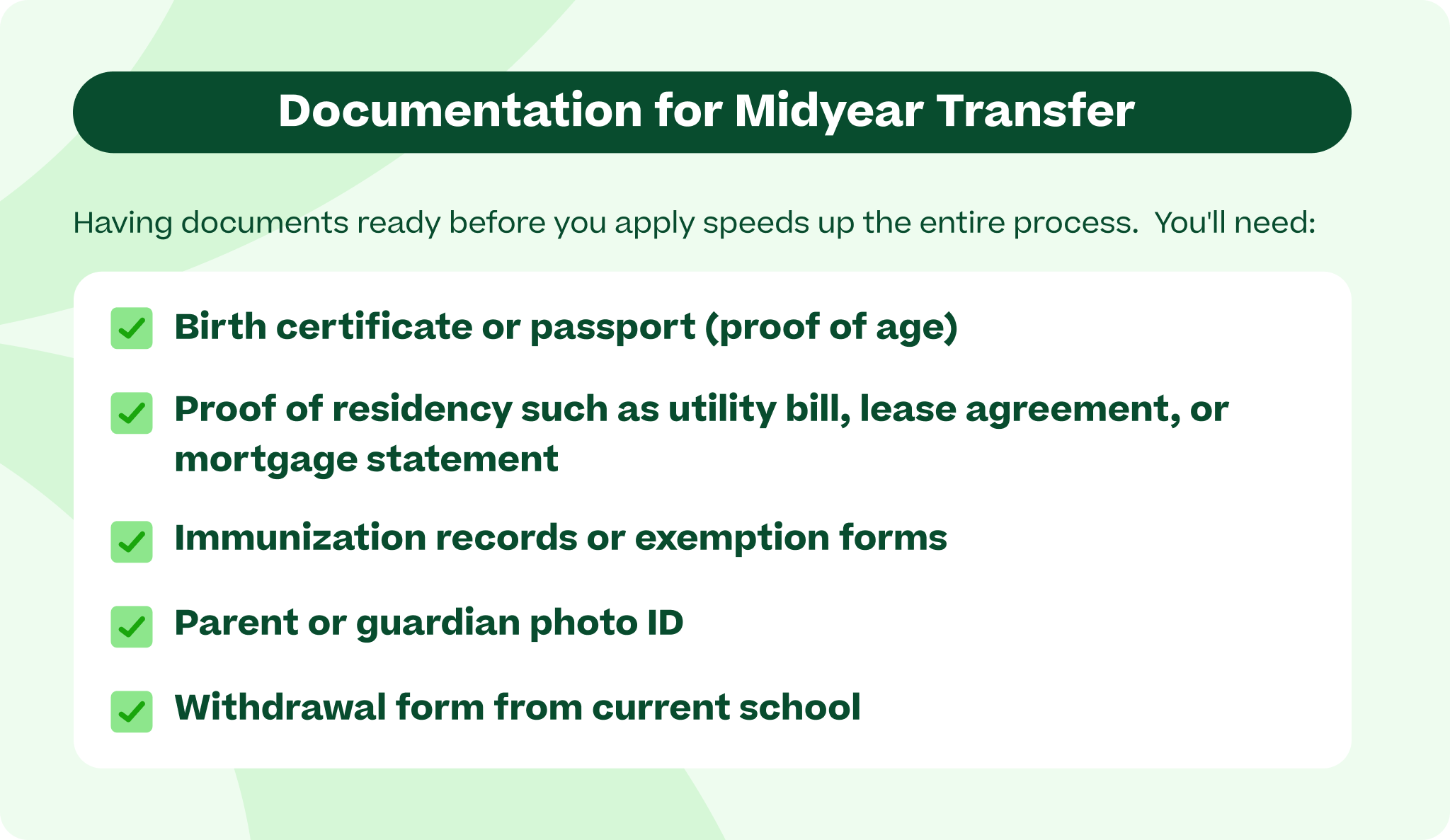
Para transferirse a una escuela en línea a mitad de año, las familias deben proporcionar documentación específica. Si su hijo planea cambiar de escuela a mediados del año escolar, comience a recopilar estos documentos de inmediato para evitar demoras innecesarias:
- Certificado de nacimiento o pasaporte (prueba de edad)
- Comprobante de residencia (factura de servicios públicos, contrato de arrendamiento o declaración de hipoteca)
- Registros de vacunación o formularios de exención
- Identificación con foto del padre o tutor
- Formulario de retiro de la escuela actual
Las escuelas públicas en línea generalmente requieren prueba de que vives dentro de su área de servicio, que puede ser un distrito, región o estado específico. Las escuelas privadas en línea a menudo tienen requisitos de residencia más flexibles, pero aún necesitan documentación.
Si se está transfiriendo de una escuela pública, el proceso de retiro generalmente implica completar los formularios del distrito y solicitar registros oficiales. Las transferencias de escuelas privadas pueden tener diferentes procedimientos, así que consulte con su escuela actual sobre sus requisitos específicos.
Expedientes académicos y transcripciones
Las escuelas en línea pueden ubicar con mayor precisión a su hijo en los cursos correctos cuando tienen acceso al historial académico de su hijo.
Para los estudiantes de primaria e intermedia, necesitarás la boleta de calificaciones más reciente que muestre las calificaciones actuales y el progreso. Los estudiantes de secundaria necesitan transcripciones oficiales que incluyan todos los cursos completados, las calificaciones obtenidas y los créditos intentados. Estas transcripciones son especialmente importantes porque afectan las transferencias de créditos y los requisitos de graduación.
Si su hijo tiene un Programa de Educación Individualizado (IEP) o un plan 504, envíe estos documentos con su solicitud de inscripción. Esto permite que la escuela en línea planifique los servicios de apoyo apropiados de inmediato, evitando cualquier brecha durante la transición.
La escuela en línea de tu elección evaluará las transcripciones de tu hijo para determinar cómo se transfieren los créditos. Las materias básicas como matemáticas, inglés, ciencias y estudios sociales generalmente se transfieren sin problemas porque siguen los estándares estatales. Para los cursos en curso, muchas escuelas otorgan créditos parciales en función de la cantidad del semestre que completó su hijo.
Algunas escuelas realizan evaluaciones de ubicación para determinar dónde debe comenzar su hijo en cada materia. Esto asegura que retomen justo donde lo dejaron sin repetir el material que ya dominan.
Requisitos tecnológicos para el aprendizaje en línea
La escuela en línea requiere tecnología confiable, pero es posible que no necesite comprar todo usted mismo. Póngase en contacto directamente con la escuela en línea para preguntar sobre los requisitos tecnológicos. Sin embargo, aquí hay algunas necesidades tecnológicas básicas que puede comenzar a planificar.
Necesidades tecnológicas básicas:
- Computadora o computadora portátil con una potencia de procesamiento adecuada (las tabletas por sí solas generalmente no son suficientes)
- Conexión a Internet fiable (al menos 10 Mbps, preferiblemente 25 Mbps o superior)
- Cámara web y micrófono para clases en vivo (integradas o externas)
- Auriculares para minimizar las distracciones
- Impresora para tareas ocasionales
Muchas escuelas públicas en línea proporcionan computadoras e impresoras prestadas a las familias que las necesitan. Estos dispositivos siguen siendo propiedad de la escuela y deben devolverse cuando su hijo se retire o se gradúe. Pregunte sobre el soporte técnico durante la inscripción porque la disponibilidad varía según la escuela y el estado.
Las familias suelen ser responsables del acceso a Internet, aunque algunos programas ofrecen asistencia para aquellos que enfrentan dificultades financieras. También deberá proporcionar suministros básicos como papel de impresora y tinta, que las escuelas no cubren.
Requisitos de elegibilidad específicos del estado
Los requisitos para transferirse a una escuela en línea a mitad de año varían según el lugar donde vivas y si estás eligiendo una escuela en línea pública o privada. Sin embargo, algunos de los siguientes son los requisitos más comunes en todos los estados y tipos de escuelas:
- Requisitos de edad: La mayoría de los estados requieren que los niños tengan 5 años de edad en una fecha específica (a menudo el 30 de septiembre) para inscribirse en kindergarten. La verificación de edad a través de certificados de nacimiento o pasaportes es estándar en todos los programas.
- Requisitos de residencia: Las escuelas públicas en línea deben seguir las reglas de residencia estatales, aceptando estudiantes solo de distritos, regiones o estados específicos. Deberá demostrar que vive en el área de servicio con documentos como facturas de servicios públicos o contratos de arrendamiento. Las escuelas privadas en línea tienen más flexibilidad con la residencia y, a menudo, pueden servir a familias en cualquier lugar.
- Requisitos de evaluación del estado: Estos requisitos se aplican a las escuelas públicas en línea al igual que las escuelas tradicionales. Su hijo deberá tomar exámenes estandarizados, lo que puede requerir viajar a un lugar de prueba. Las escuelas privadas generalmente usan sus propias evaluaciones en lugar de las pruebas estatales.
- Cronogramas de inscripción: Las ventanas de inscripción difieren según la escuela. Algunos ofrecen inscripción continua durante todo el año, lo que facilita las transferencias a mitad de año. Otros tienen períodos de inscripción específicos vinculados al calendario escolar tradicional. Consulte con la escuela elegida sobre su cronograma y cualquier fecha límite.
Comprender estos requisitos específicos del estado con anticipación puede garantizar una transición más fluida. Antes de inscribirse, tómese un momento para confirmar las pautas exactas para su estado y la escuela elegida para que pueda avanzar con facilidad.
Preparándose para su transferencia de mitad de año
Los requisitos para transferirse a la escuela en línea a mitad de año son manejables cuando sabes qué esperar. Crea una lista de verificación de los documentos que necesitas, comunícate con el equipo de inscripción de la escuela elegida si tienes preguntas y comienza a reunir la documentación con anticipación.
La mayoría de las familias encuentran que el proceso de transferencia se mueve rápidamente una vez que tienen todo organizado. La educación de su hijo no tiene que esperar al momento perfecto. Puedes hacer un cambio a la escuela en línea a mitad de año.
Una vez que comprenda los requisitos, el siguiente paso es hacer que la transición sea lo más fluida posible. Explore los recursos y herramientas esenciales que pueden ayudar a su hijo a adaptarse y tener éxito en la escuela en línea a mitad de año.
Preguntas comunes sobre la elegibilidad para la transferencia
¿Puedo cambiarme a una escuela en línea a mitad del año escolar?
Sí, puedes transferirte a la escuela en línea a mitad de año. Muchas escuelas en línea ofrecen inscripción continua, lo que permite a los estudiantes comenzar durante todo el año. Los recesos semestrales y los inicios de trimestres son puntos de transición ideales, pero las escuelas pueden acomodar transferencias urgentes cuando sea necesario. El proceso de inscripción generalmente toma de 1 a 3 semanas una vez que tenga todos los documentos requeridos.
¿Cuáles son los requisitos para transferirse a una escuela en línea a mitad de año?
La mayoría de las escuelas en línea requieren una solicitud, prueba de edad y residencia, registros académicos o transcripciones, y retiro oficial de su escuela actual. Los programas públicos también pueden tener reglas de elegibilidad y requisitos de evaluación específicos del estado, mientras que las escuelas privadas a menudo tienen criterios más flexibles.
¿Cuánto tiempo se tarda en transferirse a una escuela en línea a mitad de año?
Una vez que envíe todos los documentos requeridos, la mayoría de las escuelas procesan las solicitudes dentro de 1 a 2 semanas. Las evaluaciones de transcripción para la transferencia de créditos pueden tardar unos días adicionales. Comenzar el proceso temprano ayuda a garantizar que su hijo pueda comenzar en la fecha preferida.
¿Qué tan difícil es transferir créditos a una escuela en línea?
La transferencia de créditos suele ser sencilla, especialmente entre escuelas acreditadas. La nueva escuela revisará las transcripciones para determinar qué créditos se aplican, aunque algunos cursos pueden no transferirse exactamente y podrían requerir ajustes de ubicación o cursos adicionales.