
 Nosotros
 ¿Por qué elegir K12?
 Necesidades de seguridad
 Cómo triunfan los alumnos
 Preguntas frecuentes
 Escuela primaria en línea
 Escuela intermedia en línea
 Preparación para la profesión y la universidad
 Escuela secundaria en línea
 Clubes de estudiantes
 Servicios profesionales y universitarios
 Dentro del aula en línea
 El día a día
 Social y extracurricular
 Consejos, asesoramiento e inspiración
 Beneficios de por vida
 Inscribirse
 Todas las opciones de escuelas
 ¿Necesitas más ayuda?
Top Tips for Making Homework Go More Smoothly
Find simple ways to help homework go more smoothly. Help your child build good homework habits and get assignments done. Explore the tips today!

Tabla de contenidos
Helping kids with homework doesn't mean doing the work for them. It means creating and maintaining a positive environment, setting clear, consistent routines, and providing support that builds independence. When parents strike this balance, homework time becomes less stressful for everyone.
It's important to know when to step in and when to step back. Too much help creates dependency. Too little leaves children struggling unnecessarily. This guide offers practical strategies to help your child develop strong homework habits without creating nightly battles.
What Are the Strategies for Homework Success
Create a Homework-Friendly Environment
Where your child does homework matters more than you might think. The right environment removes distractions and helps children focus on their work.
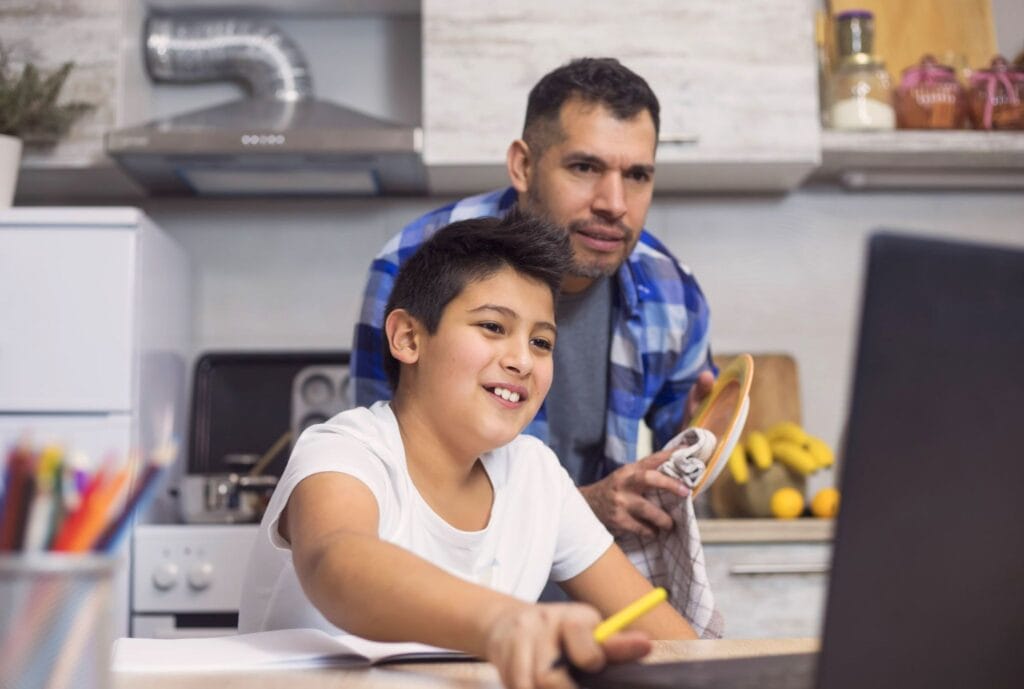
Pick a consistent homework spot every day. For children in grades K-8, a common area like the kitchen or dining room table often works better than an isolated bedroom. This allows you to stay nearby without hovering.
The space should be quiet and away from screens. Keep the TV off and put phones in another room. Good lighting prevents eye strain, and a comfortable chair helps children stay focused longer.
Let your child have input on their homework space. When children feel ownership over where they work, they're more likely to use it consistently.
Organize Supplies and Materials
Stock a homework station with everything your child needs within arm's reach. Essential supplies include:
- Pencils, pens, and erasers
- Lined and graph paper
- Highlighters and colored markers
- Ruler, scissors, and calculator
- Dictionary and age-appropriate reference materials
Use a desktop caddy or portable bin to keep supplies organized. When children don't have to hunt for a pencil, they maintain focus and momentum.
For middle schoolers juggling multiple subjects, color-code folders and notebooks by subject. This visual system helps students quickly find what they need.
Establish a Good Homework Routine

Consistency removes daily negotiations about when homework happens. When children know what to expect, resistance naturally decreases.
- Set a regular homework time. Choose the same time each day for homework. Most children benefit from 30 to 60 minutes of downtime after school before starting. This allows them to have a snack, move their bodies, and decompress from the school day.
- Some children work better while still in school mode and prefer starting right away. Others need more recovery time. Find what works for your child, then stick with it every day.
- Follow the 10-minute rule. Homework should take about 10 minutes per grade level. A third grader should spend roughly 30 minutes, while a sixth grader might spend 60 minutes. If homework consistently takes much longer, talk with your child’s teacher.
- Build in strategic breaks. Children can’t focus indefinitely. For elementary students, try 15 minutes of work followed by a 5-minute break. Middle schoolers can handle 25-minute work sessions with 5-minute breaks between them.
- Effective breaks involve genuine mental rest. Good options include getting a snack, brief outdoor time, or physical movement. Avoid screens during breaks, as they don’t provide the mental reset children need.
- Create a homework schedule together. At the start of each homework session, sit down with your child to review assignments. Make a quick list of what’s done and what remains. Let your child decide the order they’ll tackle tasks. This gives them control and helps them feel less overwhelmed.
Coach, Don’t Direct
The goal is to help your child become independent, not to do their work for them. Finding this balance takes practice.
Be available without hovering. Stay nearby doing your own tasks while your child works. Fold laundry in the dining room or prepare dinner in the kitchen. Your presence shows homework matters, but your distance communicates trust in their abilities.
When you hover over every problem, you send the message that you don't think they can handle it. Step back and let them try first.
Haga preguntas orientadoras en lugar de dar respuestas. When your child gets stuck, resist the urge to simply provide the answer. Instead, ask questions that help them think through the problem:
- “What do you know so far?”
- “What is the problem asking you to find?”
- “What strategy might help here?”
- “Can you explain what you understand?”
These questions keep your child in the driver’s seat and build problem-solving skills.
Break large assignments into chunks. Big projects can feel overwhelming. Help your child break them into smaller, manageable pieces. Use a calendar to map out daily or weekly goals. This approach teaches time management and makes large tasks feel achievable.
Sepa cuándo dar un paso atrás. If your child is working steadily and making progress, leave them alone. Productive struggle builds important skills like concentration, critical thinking, and resilience.
Distinguish between motivational resistance and genuine difficulty. If your child complains but can do the work, let them know the sooner they finish, the sooner they can do something fun. Then leave the room. Without an audience, the complaining usually stops. If the material is truly too difficult and your child is becoming distressed, reach out to the teacher for support.
How to Handle Homework Frustration
Even with the best systems in place, homework resistance happens. How you respond makes all the difference.
Recognize Struggle Versus Avoidance
Children who do frustration after genuinely struggling show effort. They start assignments but get stuck on specific concepts. They can explain what they don't understand.
Avoidance looks different. Children avoiding homework claim they have no assignments, "forget" materials at school, or engage in procrastination tactics like excessive bathroom trips or sudden requests for snacks.
Understanding the difference helps you respond appropriately. Struggle needs academic support. Avoidance needs consistent consequences and structure.
Use Positive Reinforcement
Catch your child doing things right and acknowledge it immediately. Instead of generic praise, be specific: "I noticed you started your homework right away without being reminded" or "I like how you kept trying when that problem was tricky."
For younger children, sticker charts or incentives work well. Completed homework earns points toward a larger reward. Make sure the reward comes after the achievement, not as a bribe during negotiation.
Regulate Emotions
When children become emotionally dysregulated, they can't access their problem-solving abilities. Watch for signs that frustration is building and intervene early.
Validate feelings without trying to fix them immediately: "I can see you're really frustrated right now. Math homework can feel overwhelming sometimes." This acknowledgment helps children feel understood and often helps them let go of intense emotions more quickly.
Teach calming strategies like deep breathing. Practice together when everyone is calm so your child has a tool ready when stress builds.
Communicate With Teachers When Needed
Contact your child’s teacher if homework consistently takes much longer than expected, causes frequent emotional meltdowns, or if your child doesn’t understand the material despite your help.
Frame the conversation as a partnership: "I'd like to work together to find solutions for the difficulties we're seeing at home." Come prepared with specific observations and examples. Most teachers appreciate parents who are engaged and willing to collaborate.
Building Long-Term Homework Success Habits
Developing strong homework habits takes time and patience. Focus on progress, not perfection. Some days will go smoothly, and others won't. That's normal.
The systems you establish now build skills your child will use throughout their academic career. Consistent routines, organized spaces, and the right balance of support create independence and confidence.
Remember that your role is to guide, not to do the work. When children learn to manage homework themselves, they develop self-regulation, time management, and problem-solving skills that extend far beyond school.
As you explore the best learning environment for your child, finding the right school can make all the difference. Explore schools and educational programs designed to support your child’s unique learning needs, pace, and goals.